Before the show ring
Long before the Schipperke became a show dog, it was known as a small, sharp, useful Belgian companion: alert, dark-coated, compact, and intensely aware of everything happening around it.
The breed’s early story is usually tied to Belgium, especially Flemish-speaking regions where small black dogs were kept by tradesmen, canal boat families, and working households. These dogs were valued less for ornament than for practical usefulness. They warned of strangers, guarded boats and workshops, kept company with their people, and helped control vermin.
The familiar image of the Schipperke as a “little captain” or canal boat dog is one of the most enduring parts of breed folklore. Whether every early Schipperke lived aboard a boat is unlikely, but the canal-dog association captures something true about the breed’s character: compact, portable, fearless, watchful, and deeply attached to its territory.
Belgian roots and early type
Early references often connect the Schipperke with small black Belgian dogs related in type or ancestry to the larger Belgian sheepdogs. In historical writing, the name Leuvenaar is often mentioned in discussions of the breed’s ancestry and regional development.
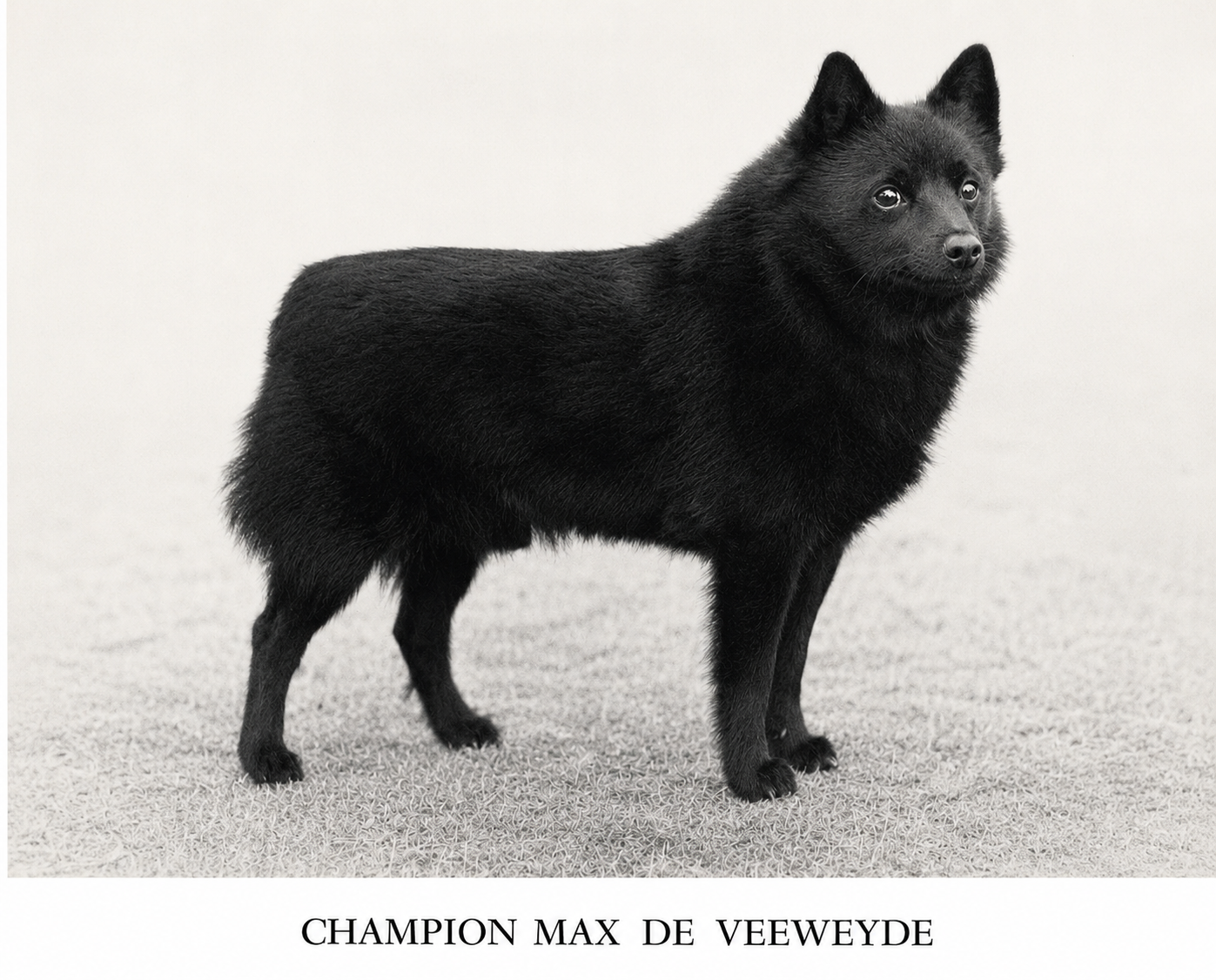
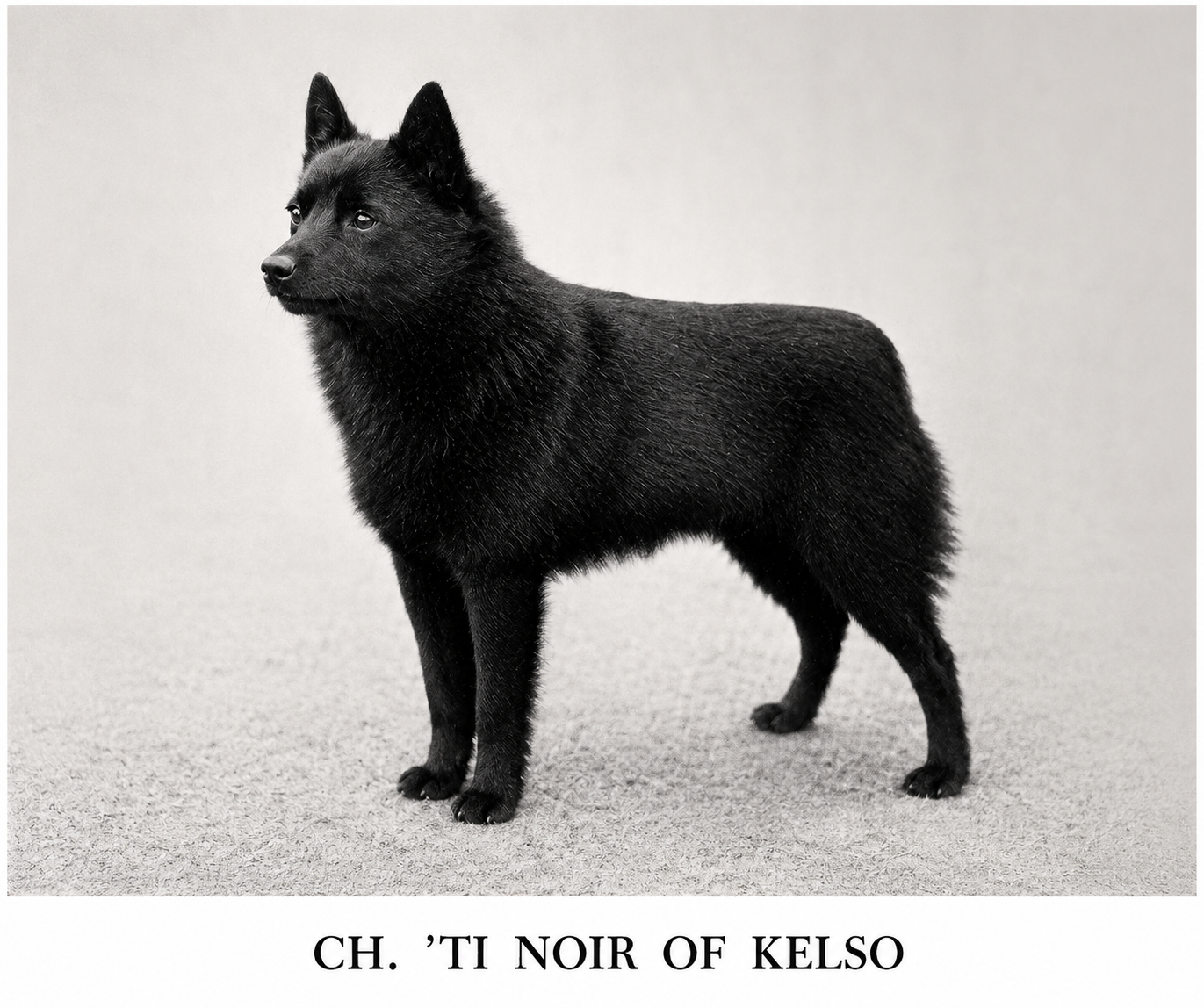
Whatever the exact path, the Schipperke became distinct through size, outline, temperament, and use. Early type emphasized a small but sturdy body, alert expression, harsh black coat, fox-like face, and a silhouette unlike a generic small companion dog. The breed was expected to be lively, suspicious of strangers, devoted to its people, and full of self-importance.
Compact working size
Small enough for boats, shops, and households, yet sturdy enough to be useful, active, and resilient.
Watchdog temperament
Alertness, suspicion, confidence, and quick response became defining parts of the breed character.
Black coat and outline
The breed’s black coat, ruff, cape, and distinctive silhouette became central to recognized type.
Belgian identity
The Schipperke’s development remained closely tied to Belgian fanciers, Belgian working life, and early European breed recognition.
The canal legend
Few Schipperke stories are more beloved than the canal boat legend. The breed is often described as the dog of Belgian bargemen, a small black guardian who lived aboard the boats, watched the cargo, warned of intruders, and served as a companion to families traveling the waterways.
The word “Schipperke” is commonly translated or interpreted as “little captain” or associated with boatmen, though historical language and regional usage have been discussed and debated by breed writers. What matters for the archive is that the boat-dog story became central to how the breed was understood and promoted.
That identity still fits the dog. A Schipperke may be small, but it carries itself like it owns the dock, the boat, the house, and quite possibly the entire neighborhood.
First shows and breed recognition
The Schipperke’s move from local working dog to recognized breed came through organized fanciers, exhibitions, and written standards. As dog shows grew in popularity in Europe, Schipperkes began appearing as a recognizable type rather than simply as useful household or boat dogs.
Early Belgian fanciers helped define the breed’s ideal form, and the process of standardization gave the Schipperke a written identity: size, coat, expression, outline, temperament, and presentation. This was the beginning of the transition from regional working dog to international breed.
Small black Belgian dogs served practical roles as watchdogs, companions, and vermin hunters in homes, workshops, and canal settings.
Fanciers began recognizing and preserving a distinct type with a particular coat, outline, expression, and temperament.
Schipperkes entered the show world, where written standards and judging helped stabilize breed type.
The breed drew attention outside Belgium, eventually reaching Britain, North America, and other countries through importation and fancier networks.
Before North America
Before the Schipperke became established in North America, its identity had already been shaped by Belgian breed culture, early European fanciers, and the practical reputation of the little black watchdog. The breed arrived with stories attached: canal boats, Belgian shops, fierce loyalty, fox-like sharpness, and a personality much larger than its body.
Later American and Canadian breeders inherited not just dogs, but a responsibility: to understand what those dogs represented. The Schipperke was never meant to be a generic small black pet. It was a breed with a strong working memory, a distinct outline, a specific temperament, and a cultural story rooted in Belgium.
Why origins still matter
Breed history is not just nostalgia. It helps explain why type matters, why temperament matters, and why the Schipperke should remain unmistakably itself. The early history of the breed gives context to its modern standard, its show-ring outline, and its legendary personality.
This origins section will continue to grow as additional historical books, early articles, photographs, standards, and breeder records are added to the archive.